

Introduction
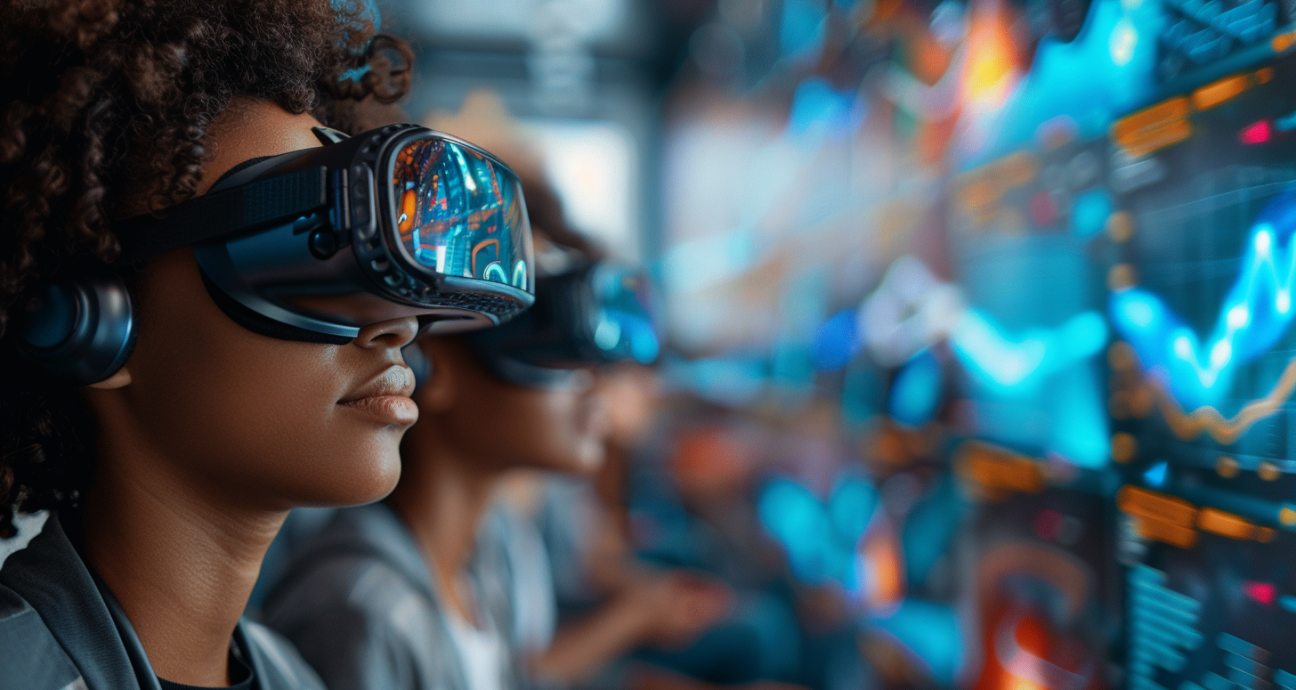
In the contemporary educational scenario, real-time simulations emerge as a powerful tool for preparing students for the real world. These interactive simulations allow students to apply theories in practical situations, enriching the practical education and transforming theoretical learning into tangible experiences. By exploring how real-time modeling, simulated trainings and dynamic animations contribute to the training of students, this article seeks to demonstrate the relevance and effectiveness of this methodology.
The Role of Real-Time Simulations in Education
Practical Education Through Virtual Experiences
To the virtual experiences and the interactive scenarios provide a safe environment where students can experiment without fear of making mistakes. These virtual laboratories are essential for disciplines that require intensive practice, such as medicine, engineering, and science. For example, in a nursing course, students can use computer simulations to practice complex clinical procedures without putting real patients at risk.
Simulation Games and Virtual Reality
You simulation games and the virtual reality offer an engaging approach to practical learning. They allow students to interact with educational simulations at a deeper level, promoting the theoretical integration with practice. One example is the use of flight simulators to train pilots, where every detail of the cockpit is recreated to provide a authentic riding experience.
Educational Simulations in the Classroom
To the classroom simulations provide an immersive learning experience, allowing students to visualize and interact with complex concepts. Educational animations and simulated activities help clarify difficult topics, making them more accessible and understandable. For example, simulations of chemical reactions can demonstrate processes that are invisible to the naked eye, such as the formation of compounds.
Applying Theories into Practice
Knowledge Transfer and Practical Implementation
THE knowledge transfer through theory exercises is one of the biggest challenges in education. However, interactive simulations facilitate this transition by allowing students to see how theories are applied in real-world contexts. For example, economics students can use market simulations to better understand the principles of supply and demand.
Theoretical Integration with Practical Applications
THE theoretical integration is fundamental for the practical application of concepts. Virtual modeling and learning simulations are effective tools for connecting theory with practice. In engineering courses, for example, students can use scientific simulations to test and improve your designs before building physical prototypes.
Use of Concepts in Real Scenarios
THE use of concepts through training simulations allows students to practice in virtual learning environments that replicate real-world situations. In business courses, business simulations can help students develop management and decision-making skills, preparing them for future challenges.
Benefits of Real-Time Simulations
Practical Skills Development
To the real-time simulations are particularly effective in developing practical skills. Medical students, for example, can practice surgeries in simulated experiences, gaining confidence and competence before operating on real patients. This practical training is crucial for professions where precision and skill are vital.
Risk Reduction
Another significant benefit of interactive simulations is risk reduction. In areas such as aviation or nuclear engineering, where errors can be catastrophic, computer simulations allow students to practice and learn in a controlled environment. This not only improves safety but also reduces the costs associated with human error.
Enhancing Active Learning
To the educational simulations promote the active learning, encouraging students to be directly involved in the learning process. This hands-on approach improves knowledge retention and increases student engagement. Virtual realities and simulation games are examples of tools that transform passive learning into an interactive experience.
Implementation of Real-Time Simulations in Education
Simulated Content Development
The development of simulated content requires a combination of specialized knowledge and cutting-edge technology. Educators and developers must collaborate to create dynamic animations and virtual modeling that are pedagogically sound and technically accurate. For example, creating a simulator for medical training involves detailed modeling of human anatomy and the simulation of various clinical conditions.
Curriculum Integration
THE simulation integration with the curriculum is essential to maximize its educational impact. The learning simulations should complement and enrich the theoretical content, providing students with a holistic learning experience. In science courses, for example, virtual experiments can be used to reinforce concepts taught in theoretical classes.
Educator Training
So that the classroom simulations For these tools to be effective, educators need to be well trained in the use of these tools. Ongoing teacher training programs can ensure that teachers are up to date with the latest technology. virtual reality and computer simulations. This allows them to integrate these tools effectively into their teaching methodologies.
Challenges and Considerations
Cost and Accessibility
One of the main challenges in implementing real-time simulations is the cost. The development and maintenance of interactive simulations can be expensive, especially for institutions with limited resources. However, the increasing availability of open source software and affordable simulation platforms is helping to mitigate this problem.
Simulation Maintenance and Update
To the educational simulations need to be continually updated to reflect changes in disciplines and curricula. This requires an ongoing commitment to maintaining and improving simulation tools. Virtual modeling Outdated information can undermine the effectiveness of teaching and result in incorrect information being conveyed to students.
Adapting to Students' Needs
To the learning simulations should be adaptable to individual learners’ needs. This includes customizing simulation scenarios to accommodate different skill levels and learning styles. For example, learners with specific challenges may benefit from simulations that offer incremental levels of difficulty.
The Future of Real-Time Simulations in Education
Technological Advances
With continued advancements in technology, the future of real-time simulations in education looks promising. Augmented Realities and virtual realities are becoming more accessible and powerful, providing new possibilities for practical education. These emerging technologies will enable students to experience increasingly realistic and immersive scenarios.
Expanding the Use of Simulations
It is expected that the use of educational simulations expand to more areas of knowledge. They are currently widely used in fields such as medicine, engineering and science, but there is significant potential for their application in areas such as the arts, humanities and social sciences. For example, simulations can be used to recreate historical events, allowing students to better understand the context and consequences of these events.
Global Collaboration
To the real-time simulations also have the potential to promote global collaboration. Students from different parts of the world can participate in virtual experiences together, exchanging knowledge and perspectives. This not only enriches the learning experience, but also prepares students for an increasingly interconnected world.
Conclusion
To the real-time simulations are a valuable tool for practical education, providing students with the opportunity to apply theories in real situations. They offer a safe and effective way to develop practical skills, reduce risk, and increase student engagement. As technology advances, the potential of interactive simulations to transform education will continue to grow. With careful implementation and continued innovation, educational simulations can prepare today’s students to face tomorrow’s real-world challenges.




 EN
EN  PT_BR
PT_BR