

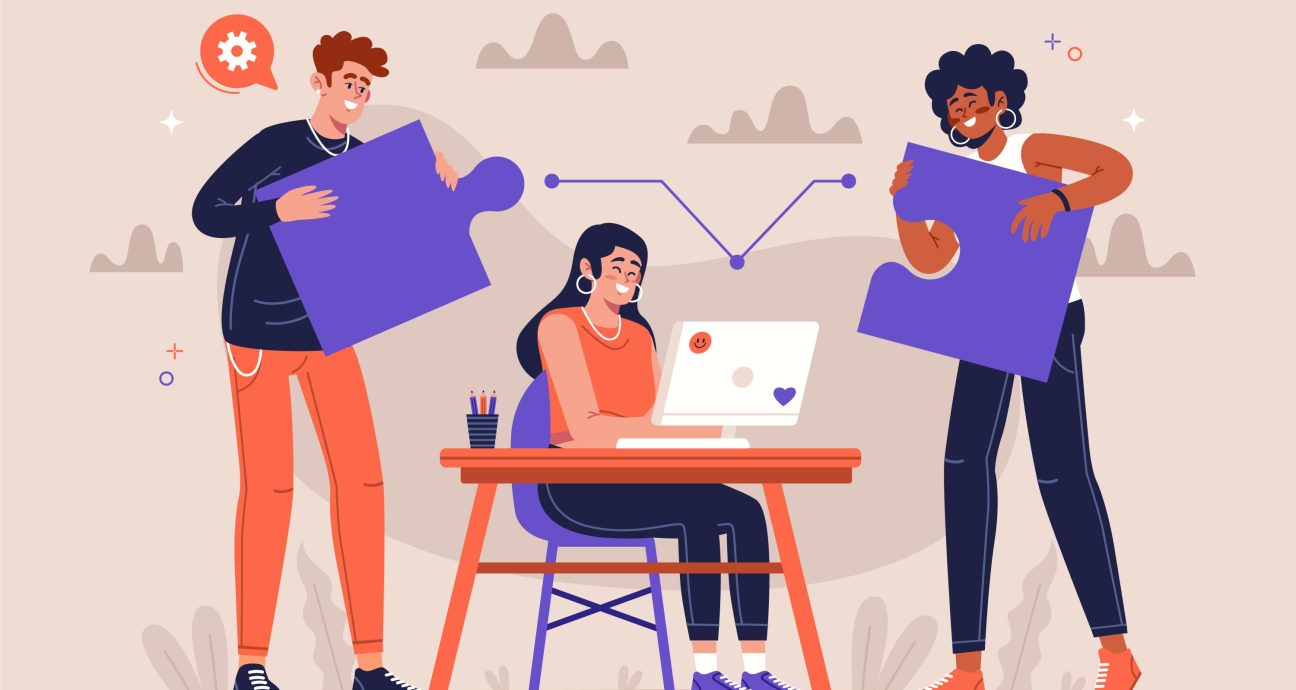
Gamification is an innovative tool that can be used to develop essential customer service skills such as empathy and effective communication. By integrating game elements and simulations into training processes, companies can significantly improve the soft skills of frontline employees. In this article, we will explore how gamification can be used to enhance these crucial skills.
Key Insights on Gamification and Soft Skills Development
- Empathy: Gamification can be used to develop empathy through simulations that put employees in situations where they need to understand and respond to customer needs effectively. This helps create a deeper connection with customers, improving customer experience (CX).
- Effective Communication: Gamified games and simulations encourage clear and efficient communication between employees and customers. By practicing different scenarios, employees learn to communicate assertively and respectfully, solving problems more efficiently.
- Teamwork: Gamification promotes teamwork, where employees collaborate to solve simulated challenges. This strengthens team cohesion and improves the ability to deal with complex customer service situations.
How Gamification Works in Soft Skills Development
Gamification uses elements such as points, levels, rewards, and immediate feedback to make training more interactive and motivating. For example, in a simulation game, employees can earn points for effectively solving customer problems, which motivates them to continually improve their communication and empathy skills.
Benefits of Gamification in Soft Skills Development
- Employee Engagement: Gamification increases employee engagement in training by making it more engaging and fun. This results in better retention of learned skills and an increase in motivation to continuously improve.
- Improved Customer Experience: By developing skills like empathy and effective communication, employees can provide a more personalized and satisfying experience to customers, increasing customer satisfaction and loyalty.
- Error Reduction: Continuous practice in gamified simulations helps reduce errors in customer service, as employees are better prepared to deal with different situations and scenarios.
Success Stories in the Implementation of Gamification
- Deloitte: Deloitte implemented a gamification program that used interactive simulations to train its employees in leadership and communication skills. The results showed a significant increase in employee confidence when dealing with customers.
- Zappos: Popular online shoe company Zappos used gamification in its customer service training. Employees played games that simulated interactions with difficult customers, resulting in a notable improvement in customer satisfaction.
- SAP: SAP created a game called “SAP Community Challenge” where employees competed in teams to solve real-world problems faced by customers. This not only improved communication skills among teams but also resulted in innovative solutions for customers.
Relevant Data on Gamification and Soft Skills Development
- Studies show that companies that adopt gamification see significant improvements in employees’ soft skills, including empathy and effective communication.
- Gamification can increase customer satisfaction by up to 20% and improve employee productivity by up to 30%, according to reports from companies that have implemented this strategy.
- Gamification has been shown to be more effective than traditional training methods in increasing information retention and improving employee performance in real-world situations.
Conclusion
Gamification is a powerful tool for developing essential customer service skills like empathy and effective communication. By transforming training into a fun and interactive experience, companies can significantly improve the customer experience and increase employee satisfaction. To start your gamification journey and improve your soft skills, try our interactive game! Play now and discover how you can become a customer service expert!




 EN
EN  PT_BR
PT_BR